


Salt Air and Swamp Humidity: Why Condenser Coils Fail Faster in Slidell and Chauvin
The Hidden Threat Reducing AC Lifespans by 50% in Coastal Microclimates
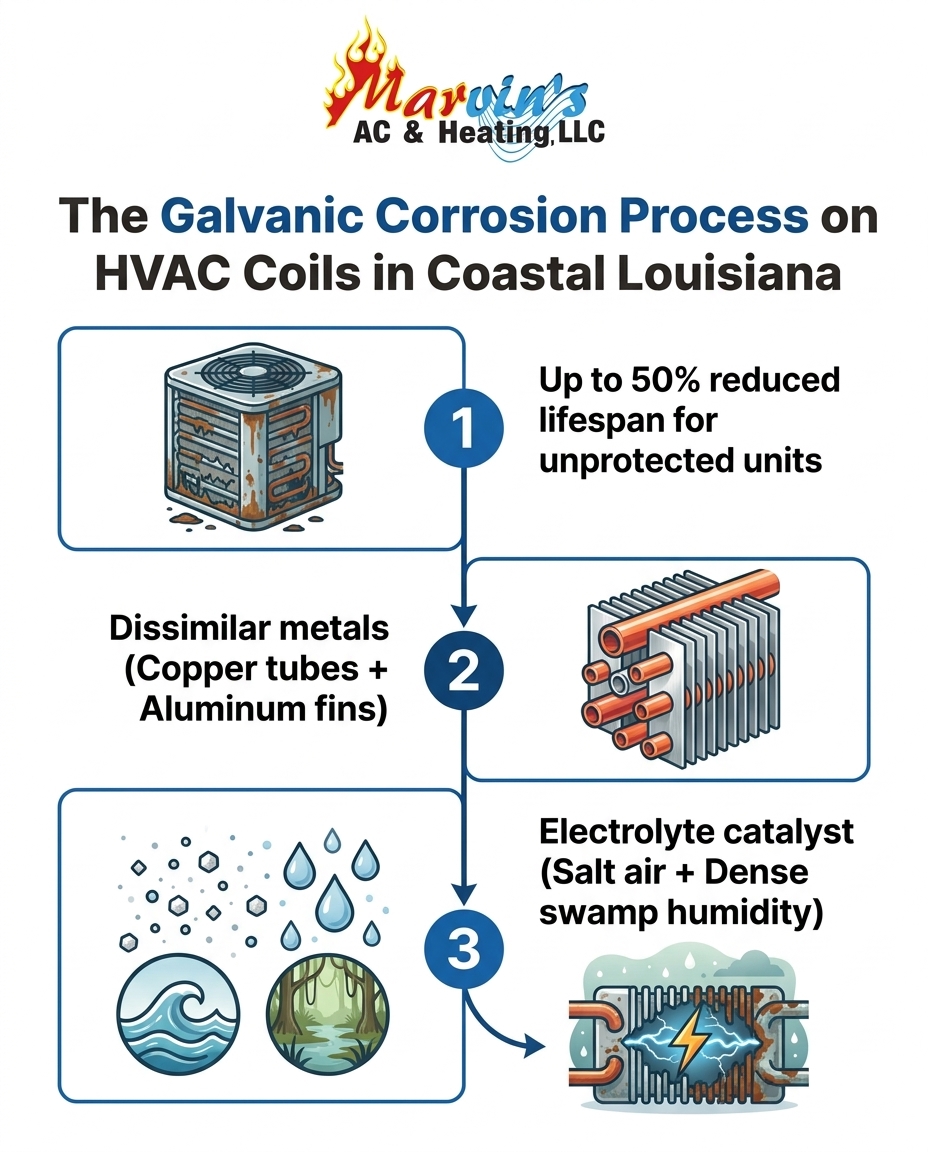
At Marvin's AC & Heating LLC, our technicians see firsthand how unprotected outdoor condenser units in coastal environments can lose up to 50% of their expected lifespan due to accelerated pitting and rust. If you live near the water, you already know the environment is tough on metal. Salt Air and Swamp Humidity: Why Condenser Coils Fail Faster in Slidell and Chauvin comes down to a highly corrosive combination that standard inland maintenance simply cannot handle. Salt-laden Gulf air mixes continuously with stagnant bayou moisture to create a unique, hyper-local environmental stressor. This creates a concrete problem for homeowners in coastal and bayou-adjacent Louisiana (Slidell and Chauvin): your air conditioning system is constantly under chemical attack.
You face a critical decision point. You can either rely on generic inland maintenance and risk premature equipment failure, or you can adopt specialized anti-corrosion approaches designed for your specific microclimate. Inland cities like Baton Rouge do not experience this intense mixture of airborne salt and heavy, unyielding moisture. Because of this, standard cleaning protocols fall short when applied near the coast. To protect your investment, you need a strategy built specifically for the unique atmospheric conditions of the bayou.
For professional help navigating these unique regional challenges, explore our Air Conditioning Services.
The Science of Galvanic Corrosion on Copper and Aluminum Coils
To understand why outdoor units degrade so rapidly in coastal and bayou-adjacent Louisiana (Slidell and Chauvin), we have to look at the chemistry of your air conditioner. The destruction is driven by a process called galvanic corrosion. This is an electrochemical reaction where one metal corrodes preferentially when it is in electrical contact with a different type of metal, provided there is an electrolyte present to facilitate the reaction.
Modern condenser coils are typically manufactured using two dissimilar metals. The tubes that carry the refrigerant are made of copper, while the thin fins that dissipate the heat are made of aluminum. This pairing is excellent for transferring heat out of your home, but it makes the unit inherently vulnerable to galvanic corrosion. When salt from the coastal air coats these metals, it acts as a highly conductive catalyst. The salt accelerates the transfer of ions from the weaker metal (aluminum) to the stronger metal (copper), causing the aluminum to literally dissolve over time.
When our team performs pre-winter inspections in Slidell, we often spot the physical symptoms of this process before total failure occurs. We train our technicians to look for these warning signs:
1. White powdery residue: This is aluminum oxide, the first visible sign that the aluminum fins are breaking down.
2. Brittle metal: As the fins lose mass, they become fragile and will easily crumble when touched.
3. Flaking and crumbling: Entire sections of the cooling fins may detach from the copper tubing.
4. Eventual refrigerant leaks: Once the fins degrade, the copper tubes are exposed to direct environmental stress, eventually leading to micro-leaks and loss of cooling power.
How Dissimilar Metals React
The engineering behind pairing copper and aluminum is based entirely on thermal efficiency. Copper is incredibly durable and holds pressurized refrigerant exceptionally well. Aluminum is lightweight, relatively inexpensive, and highly effective at radiating heat away from the copper tubes. In a dry, inland environment, this pairing works flawlessly for decades.
However, this specific pairing becomes a massive liability in salt-heavy environments. Because aluminum is a more "active" metal than copper on the galvanic scale, it essentially sacrifices itself to protect the copper when an electrolyte is introduced. Without specialized protection, the degradation timeline of unprotected aluminum fins in coastal areas can be shockingly short. Within just a few seasons, the fins can corrode so severely that the unit loses its ability to cool your home efficiently.
Why Swamp Humidity is the Perfect Electrolyte for Rust
The Problem: Galvanic corrosion requires an electrolyte to function. An electrolyte is simply a liquid that contains ions and can conduct electricity. In the case of your air conditioner, water serves as the primary electrolyte, allowing the destructive chemical reaction between the copper and aluminum to take place.
The Cause: In our years of servicing HVAC systems across the region, we've learned this is exactly where the specific microclimate of coastal and bayou-adjacent Louisiana (Slidell and Chauvin) becomes so destructive. In many parts of the country, morning dew evaporates by the afternoon, giving the metal a chance to dry out and halting the corrosion process. However, dense swamp humidity behaves differently. The air is so heavily saturated with moisture that natural evaporation is severely inhibited. The dense, heavy moisture from the bayous prevents the coils from ever truly drying out. Furthermore, this thick humidity traps microscopic salt particulates from the Gulf air, gluing them directly to the metallic surfaces of your condenser unit.
The Solution: Because the moisture never fully dries, the galvanic corrosion process runs continuously, 24/7, drastically accelerating pitting and metal loss. The only way to stop this relentless cycle is to physically remove the salt and create a barrier between the metal and the moisture. Regular rinsing helps, but surviving this permanent electrolyte bath requires professional intervention to neutralize the chemical reaction before it compromises the structural integrity of the coils.
Standard Inland Maintenance vs. Coastal Protection Needs
Standard inland maintenance protocols, like those used effectively in Baton Rouge, focus primarily on clearing away dirt, pollen, and lawn clippings. While these steps are important, they completely fail to protect units positioned closer to the Gulf. If you treat a coastal condenser unit like an inland unit, you are leaving it exposed to rapid chemical degradation.
One major issue is that standard HVAC cleaning solutions can sometimes react poorly with accumulated salt if the coils are not properly neutralized first. Generic foaming cleaners might push salt deeper into the delicate aluminum fins rather than washing it away. This is why the crew at Marvin's AC & Heating LLC utilizes specific anti-corrosion maintenance routines that generic inland contractors often overlook. Having served the greater Baton Rouge area and its coastal neighbors for years, we know exactly how to treat equipment in coastal and bayou-adjacent Louisiana (Slidell and Chauvin) because we understand the unique chemistry of the local air.
Professional-grade inspections in these microclimates specifically look for early-stage pitting before catastrophic failure occurs. A generic tune-up might check the refrigerant levels and change a filter, but a localized inspection evaluates the microscopic integrity of the aluminum fins.
• Coil Cleaning — Standard Inland Approach: Basic removal of dirt and leaves — Coastal & Bayou Approach: Chemical neutralization of salt deposits
• Inspection Priority — Standard Inland Approach: Airflow and basic electrical connections — Coastal & Bayou Approach: Early-stage pitting and galvanic corrosion signs
• Protective Measures — Standard Inland Approach: None typically required — Coastal & Bayou Approach: Application of marine-grade coil coatings
• Cleaning Agents — Standard Inland Approach: Standard foaming coil cleaners — Coastal & Bayou Approach: Specialized salt-dissolving non-acidic washes
For specialized care tailored to this environment, learn more about our AC Repair in Slidell.
The Cost of Ignored Pitting
When galvanic corrosion is ignored, the financial impact extends far beyond the eventual cost of replacing the unit. As the aluminum fins corrode and crumble, the system experiences a massive reduction in heat transfer efficiency. According to Department of Energy standards, an air conditioner must be able to freely release heat outdoors to cool the indoor air effectively.
When the fins are covered in a layer of insulating aluminum oxide, or when they crumble away entirely, the compressor is forced to run significantly longer to achieve the same amount of cooling. This increased workload causes a sharp spike in electrical consumption, driving up your monthly utility bills. Furthermore, the constant strain on the compressor, combined with the thinning of the copper tubes, makes micro-leaks in the refrigerant lines an absolute inevitability.
The October Window: Why Pre-Winter Salt Removal is Non-Negotiable
Timing is everything when it comes to defending your HVAC system against the elements. Based on our extensive field experience, our team at Marvin's AC & Heating LLC identifies mid-fall as the critical window to wash off accumulated summer salt and apply protective treatments. As the intense summer heat fades and Louisiana weather patterns shift, your air conditioner enters a phase of reduced activity. This period leading into winter is the most dangerous time for a salt-covered condenser coil.
During the peak cooling season, your air conditioner runs constantly. While the outdoor unit is exposed to salt, the sheer volume of condensation produced by the system can sometimes provide a very minor rinsing effect. However, the real danger begins with system dormancy. During the cooler months, the AC runs far less frequently. This means the protective, natural rinsing stops completely.
If wet salt is allowed to sit on dormant coils over the winter, it will cause rapid, unchecked pitting. The dense swamp humidity continues to bathe the unit in moisture, but without the system running to generate heat and airflow, the salt just sits on the metal and eats away at the aluminum. This is why a mid fall (October) pre-winter inspection is absolutely vital.
A proper pre-winter maintenance visit achieves several crucial goals:
1. Neutralizing summer salt: Completely washing away the corrosive buildup from the active cooling season.
2. Checking for pitting: Inspecting the copper and aluminum for any signs of structural weakness before the cold weather sets in.
3. Preparing for dormancy: Ensuring the unit is clean, dry, and structurally sound before it sits idle for extended periods.
While homeowners can handle basic upkeep like changing indoor filters, dealing with corrosive salt buildup requires professional tools. Read more about what you can handle yourself in our guide to DIY HVAC Preventative Maintenance.
Marine-Grade Protective Treatments Explained
To truly combat galvanic corrosion in coastal and bayou-adjacent Louisiana (Slidell and Chauvin), standard cleaning is only half the battle. The ultimate defense relies on marine-grade protective treatments and specialized coil coatings designed specifically for coastal HVAC applications. These are not generic spray paints; they are highly engineered chemical barriers.
These marine-grade coatings work by creating a microscopic, durable barrier that physically prevents the electrolyte (the salt-laden swamp humidity) from ever touching the dissimilar metals. If the saltwater cannot make contact with the copper and aluminum simultaneously, the galvanic corrosion process cannot occur. The electrical circuit between the two metals is effectively broken.
The application process for these treatments is highly technical and requires specialized training. The coating must be applied in incredibly thin, perfectly even layers. If the coating is applied too thickly, it will act as an insulator, trapping heat inside the coils and ruining the system's efficiency—exactly what you are trying to prevent by stopping the rust. If it is applied too thinly, microscopic pinholes will allow salt to penetrate, and the corrosion will begin beneath the coating, causing it to flake off.
Because of this delicate balance, applying these coatings requires a licensed professional. Improper application can completely destroy a condenser unit's ability to transfer heat. By making specialized, marine-grade coil coatings a core part of our hyper-local protective protocol at Marvin's AC & Heating LLC, we ensure that your system is shielded from the environment without sacrificing its cooling power. Discover more about how we serve your specific area by visiting our Slidell Service Area page.
Frequently Asked Questions About Coastal AC Degradation
Why do AC coils rust so fast in Louisiana?
Air conditioner coils rust exceptionally fast in Louisiana due to a combination of dissimilar metals, high salt content in the air, and dense swamp humidity. Modern coils use copper tubes and aluminum fins, which react chemically when exposed to an electrolyte. The thick, stagnant humidity acts as a continuous electrolyte bath, allowing airborne salt to accelerate the galvanic corrosion process 24 hours a day.
How do you protect a condenser coil from salt air?
Protecting a condenser coil from salt air requires regular professional salt-removal cleanings and the application of marine-grade anti-corrosion coatings. These specialized coatings create a microscopic barrier that prevents saltwater from touching the copper and aluminum. Additionally, adhering to a strict mid fall (October) pre-winter inspection schedule ensures that summer salt is neutralized before the system goes dormant.
Should I clean my AC unit before winter?
Yes, cleaning your AC unit before winter is absolutely vital in coastal and bayou environments. A mid fall (October) pre-winter inspection and cleaning removes the heavy accumulation of summer salt. If left uncleaned, this wet salt will sit on the dormant coils throughout the winter, causing rapid, unchecked pitting and metal degradation while the system is inactive.
How long do AC units last in coastal areas?
Unprotected AC units in coastal areas can see their expected lifespans reduced by up to 50% due to accelerated rust and galvanic corrosion. However, units that receive proper, hyper-local maintenance—including marine-grade coatings and routine salt neutralization—can last significantly longer. The key to longevity is preventing the salt from making direct, prolonged contact with the bare metal.
Does high humidity cause AC coils to rust?
High humidity alone causes relatively slow oxidation, but when combined with airborne salt, it becomes highly destructive. The dense humidity in the bayou prevents natural evaporation, meaning the coils never truly dry out. This creates a permanent liquid electrolyte bath that triggers rapid galvanic corrosion, dissolving the aluminum fins much faster than dry air would.
What makes marine-grade HVAC coating different from standard paint?
Marine-grade HVAC coatings are specifically engineered to be thermally conductive, meaning they protect the metal from salt without acting as an insulator. Standard paint or generic rust-proofing sprays will trap heat inside the coil, drastically reducing the air conditioner's efficiency and overworking the compressor. Marine coatings require specialized professional application to maintain this delicate balance of protection and heat transfer.
Secure Your System Against the Elements Before Winter Dormancy
The unique threat that salt air and dense swamp humidity pose to your outdoor air conditioning unit cannot be overstated. Standard inland maintenance routines simply are not equipped to handle the rapid galvanic corrosion that occurs when copper and aluminum are constantly bathed in a salty, humid electrolyte. Left unchecked, this environment will drastically reduce the lifespan of your equipment and drive up your monthly energy costs.
Our experts at Marvin's AC & Heating LLC strongly advise acting now during the critical October window before winter dormancy sets in. Allowing summer salt accumulation to sit on your inactive coils throughout the cooler months guarantees severe pitting and degradation. Rely on hyper-local expertise to apply the right marine-grade coatings and perform the specialized salt-removal protocols your system desperately needs.
By understanding exactly why your hyper-local environment degrades condenser coils faster than inland areas, and learning about the specific professional coatings and fall maintenance routines that prevent premature failure, you can protect your comfort and your wallet. Schedule your specialized mid fall (October) pre-winter inspection today by booking your AC Maintenance in Slidell.
Customer Testimonials

Service Areas

